
AI Engineering notes
Engineering notes on agents, MCP, RAG and LLMOps, and on building software with AI coding tools such as Claude Code and Codex.
AI Engineering essays
The full set, newest first. Each note is written to help you make a decision rather than to recap the news.
Durable AI Agents: What Must Survive a Crash?
An agent can remember the conversation and still repeat a completed action. Learn what durable execution must preserve, how to handle uncertain outcomes, and what to test before trusting recovery.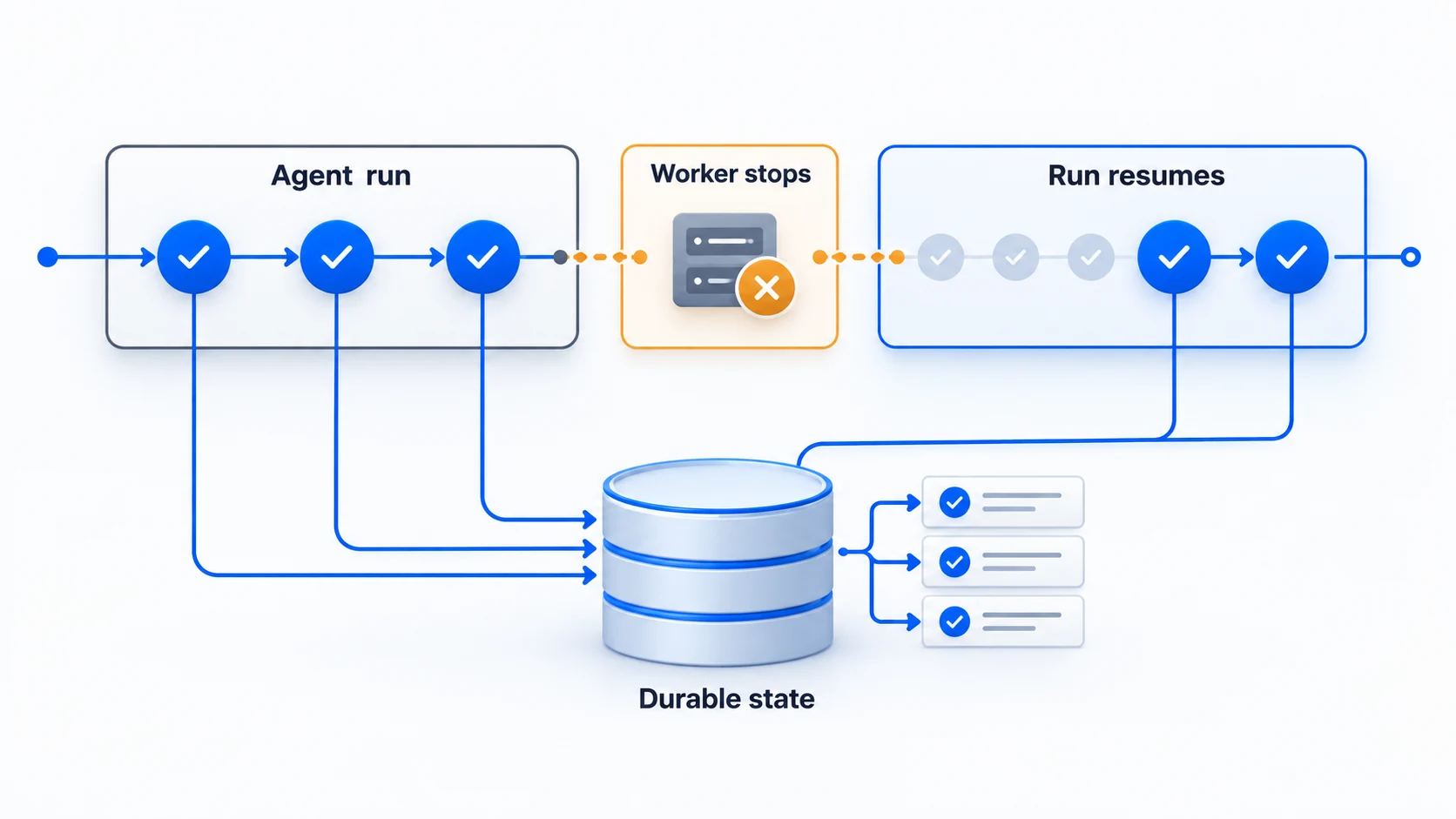
LLMOps for Document AI: How to Evaluate and Monitor Production Workflows
Evaluate document extraction with an original invoice example, runnable scoring script, and monitoring scorecard. Track the fields, evidence, and reviewer decisions that matter.
MCP for AI Agents: The Data Layer That Turns Chatbots Into Operators
Useful AI agents need more than chat. MCP gives them a standard way to reach tools, live web data, databases, and governed workflows.
Agentic Loops: When AI Agents Should Loop and When Humans Should Stay In Control
Agentic loops are useful when the feedback signal is explicit, bounded, and cheap to repeat. For product work, open-ended loops often waste tokens and make the wrong assumptions faster.
The Future of Web Design Is Declarative, Personalized UI
The next web design shift is not chat widgets everywhere. Agents will compose validated interface grammars from user context, data, permissions, and intent.
How to Use AI Coding Agents to Create Advanced 3D Shape Websites
A practical prompt workflow for using Codex, Claude Code, and AI image generation to build cinematic 3D shape websites that feel designed, not generated.
Claude Code Is Bigger Than Coding: My Top 5 Workflow Features
After hundreds of hours using Claude Code, these are the five workflow features that changed my day-to-day work the most.
Codex Sites Turns Prompts Into Shared Internal Apps
Codex Sites lets teams create, save, deploy, and share hosted websites, apps, dashboards, and lightweight internal tools from Codex.
How to Build Beautiful Frontends With AI Coding Agents
AI can generate polished interfaces, but beautiful frontends come from taste systems, product truth, responsive constraints, component states, and visual QA.
AI Agent Workflows: How to Build Agents That Don't Break in Production
A practical framework for production AI agent workflows: state, actions, verification, escalation, and recovery. Includes examples, source links, and a build checklist.
AI Dashboard Software Is Being Eaten by Agents
AI dashboard tools are being compressed by coding agents and general AI assistants. The durable value is trusted metrics, governed data, provenance, and decision workflows.
RAG Is Infrastructure Now: Why Retrieval Belongs Outside the Chatbot
RAG is a retrieval-and-generation pattern, not a data visualization method. The next useful architecture is shared retrieval infrastructure for agents, search, and internal AI workflows.
Category guide
The engineering around the model
Production AI systems are defined by the controls around inference: state, tools, permissions, source provenance, evaluation, retries, observability, and human escalation. This category documents those engineering decisions through agent, retrieval, data, and interface patterns.
A model can produce an impressive answer while the surrounding system remains unsafe or impossible to operate. Engineering work makes the workflow inspectable. It records what context was used, which action was taken, what failed, what a reviewer changed, and how the system should recover. Those traces become both the audit trail and the improvement loop.
Use these articles when designing an agent that touches company systems, building retrieval over a changing corpus, reviewing an AI architecture, or deciding what must be measured before a workflow can be trusted with more volume or autonomy.
Questions these guides should help answer
- Q1What state must survive between steps, retries, and user sessions?
- Q2Which tools and data sources are necessary, and what permissions should each receive?
- Q3How will the system cite evidence, surface uncertainty, and escalate exceptions?
- Q4Which evaluation and operating metrics reveal regression after launch?