
Build notes / Construction technology
AutoBOQ build note
A working drawing-to-quantity prototype for testing reviewable AI-assisted takeoff and bill-of-quantities workflows on PDF plans.
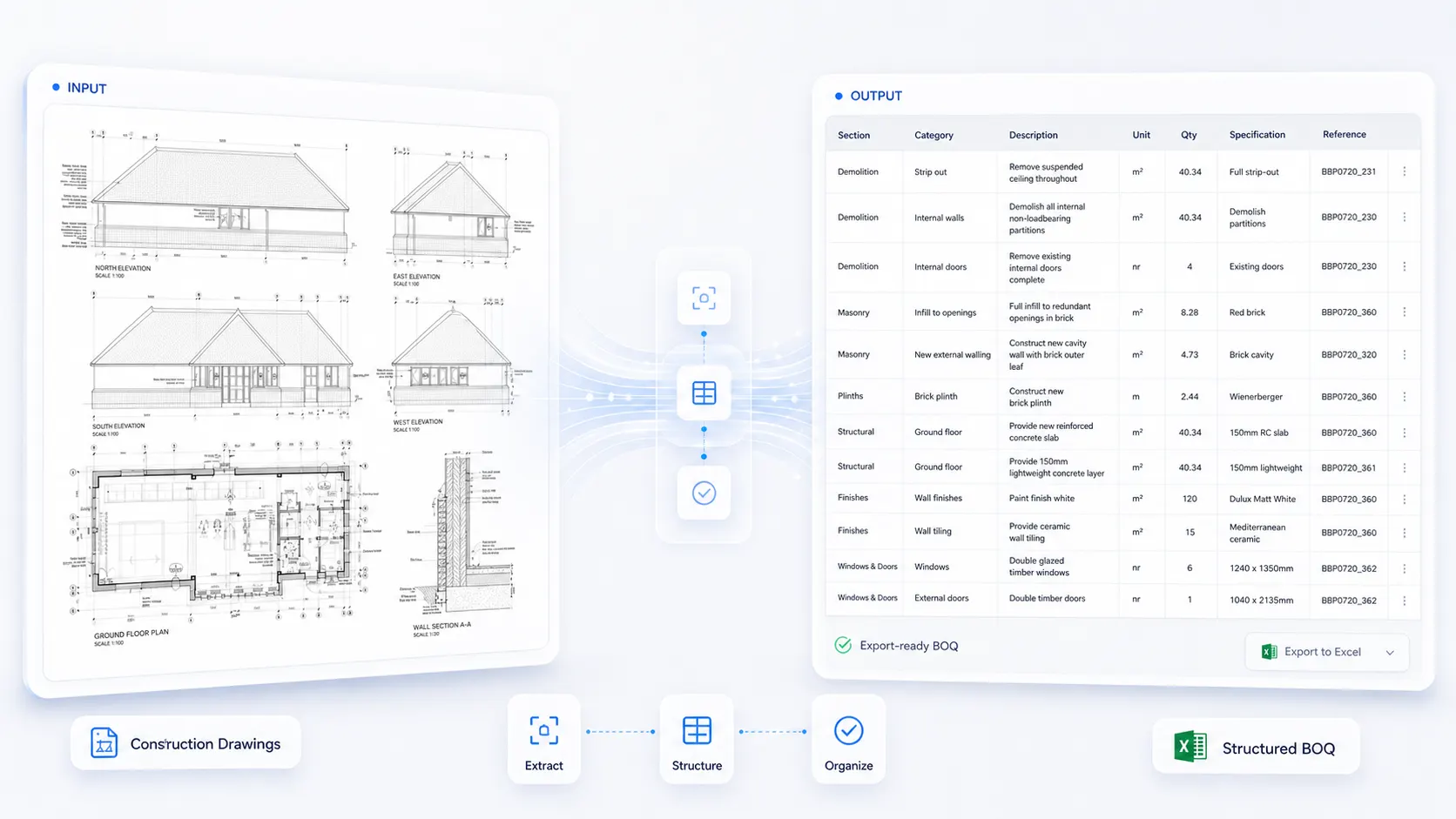
The operating problem
Quantity takeoff begins with information trapped in drawings, schedules, specifications, and revisions. Before a quantity surveyor can price or review the work, that material has to become a structured set of rooms, dimensions, assumptions, and measurable items.
The useful product question was not whether a model could look at a drawing. It was whether a narrow workflow could turn a real PDF into a reviewable quantity structure while keeping assumptions visible to the estimator.
How we approached it
AutoBOQ treats the drawing as the start of an evidence pipeline. The prototype accepts architectural PDFs, extracts relevant drawing context, identifies measurable elements, and produces a structured output intended for human review.
The scope is deliberately narrower than autonomous estimating. Pricing context, standards, drawing quality, revisions, and professional judgment remain material constraints. The prototype is designed to expose those constraints before a team invests in a full deployment.
What was built
- A PDF upload and processing flow for architectural drawing material.
- A structured representation of detected rooms, dimensions, and quantity items.
- A reviewable BOQ-style output rather than an untraceable prose answer.
- Clear workflow boundaries showing where extraction ends and professional measurement review begins.
- An accompanying construction course documenting takeoff, pricing, standards, safety, and implementation considerations.
Constraints and trade-offs
- Drawing conventions, scan quality, scale information, and revision status vary substantially.
- A detected object is not automatically a correctly measured BOQ item.
- Rates and pricing require a separate, maintained commercial context.
- Professional review remains necessary before quantities affect procurement or cost decisions.
Evidence you can inspect
- The working prototype is available on the SupaMakers site.
- The product can be evaluated against a user's own suitable drawing rather than a curated screenshot.
- No time-saving, accuracy, or customer ROI figure is claimed here without a documented validation set.
What this demonstrates
A production engagement would begin with a defined drawing set, measurement rules, expected outputs, and an agreed evaluation sample. That turns a visual demonstration into a measurable workflow decision.
Law AajKal
Live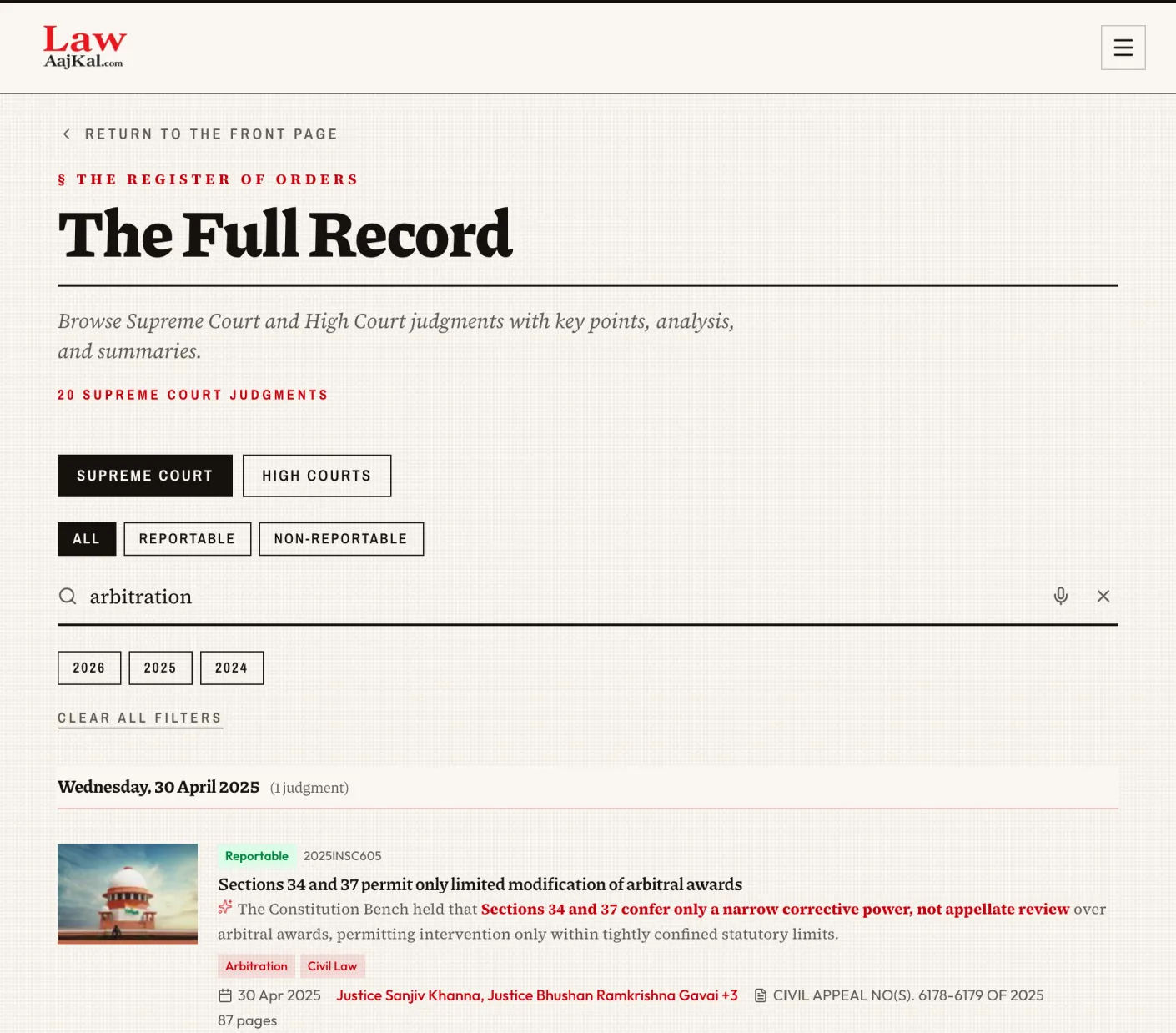
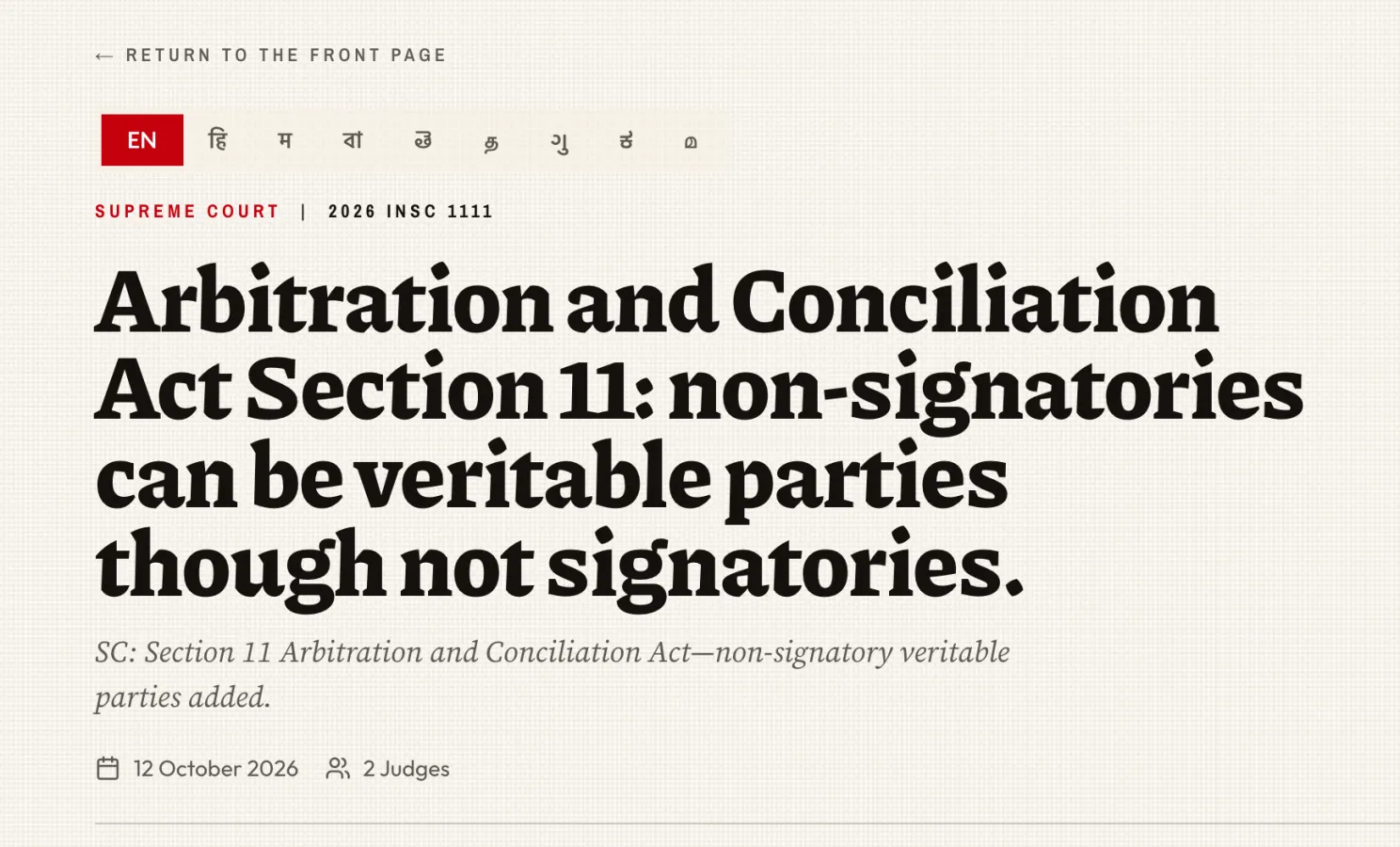
Indian judgments explained daily, on web, iOS and Android.
Live product with an App Store listing and a published build note.